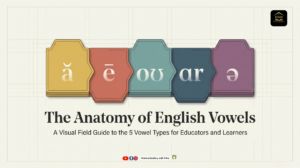
1. The Hidden Complexity of the Alphabet.
Most students are introduced to literacy through the simple mnemonic that vowels are the letters A, E, I, O, and U. While these five graphemes are the foundation of our written system, the reality of spoken English is rooted in articulatory phonetics. Vowels are not merely static marks on a page; they are dynamic physical events occurring within the vocal tract. As educators and language enthusiasts, we must shift our perspective from the page to the mouth. Producing these sounds involves sophisticated coordination of breath and muscle movement. Understanding this hidden complexity is key to developing true phonemic awareness and helping learners master the nuances of the English language.
2. The Physics of Sound: What Actually Makes a Vowel a Vowel?
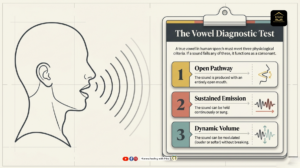
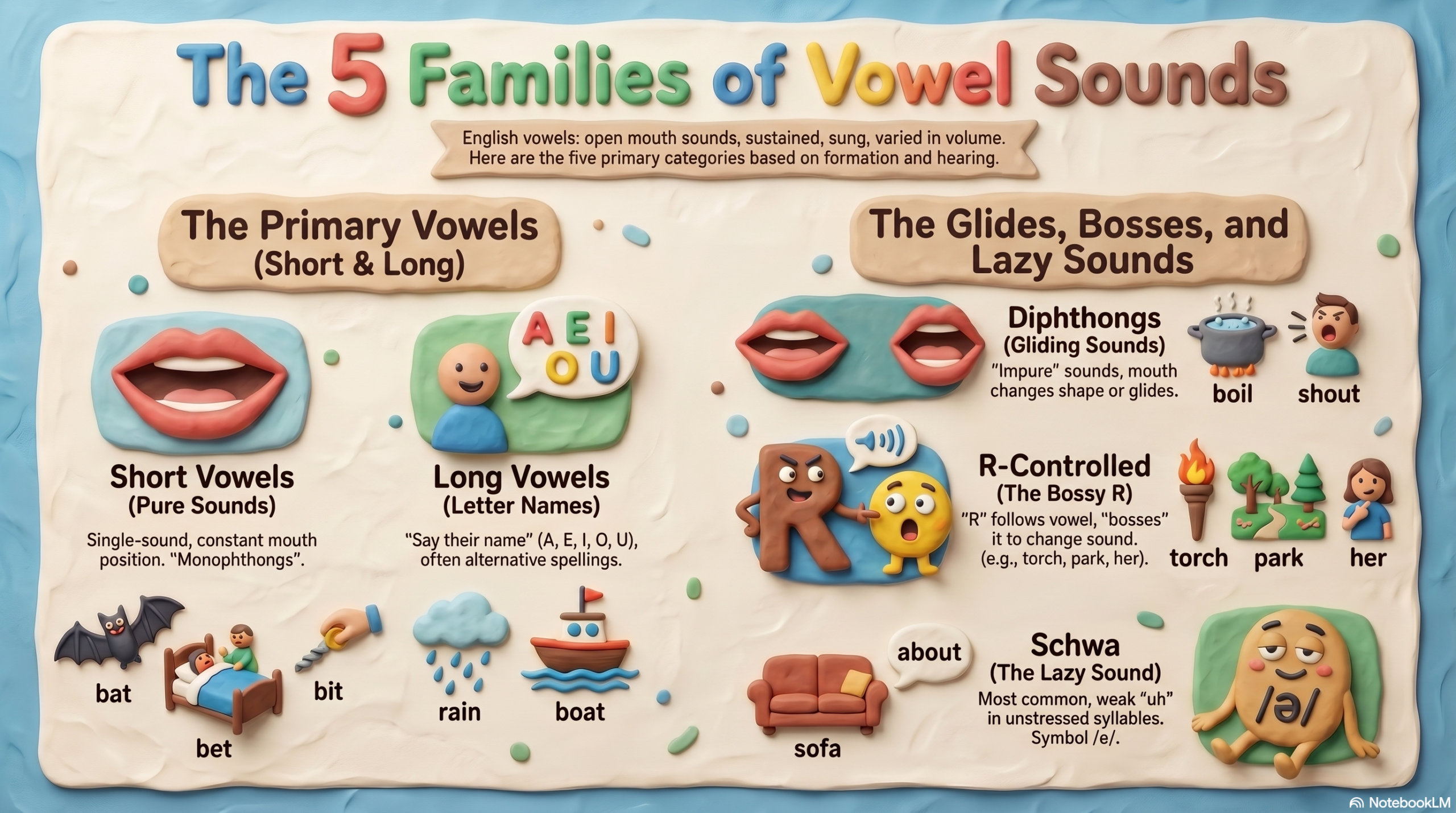
In the study of linguistics, a vowel is defined by the way the sound is articulated without obstruction. Unlike consonants, which rely on friction or the stopping of air by the teeth, tongue, or lips, a vowel is a clear channel of sound. There is a specific “litmus test” used to distinguish these phonemes. A vowel is a sound in human speech that humans produce with an open mouth. This sound can be sustained or sung, and made louder or softer. If any letter follows all three things, it’s a vowel; if it’s not, it’s a consonant. From a pedagogical standpoint, this litmus test is invaluable. Teaching children to “sing” a sound helps them physically distinguish between the continuous flow of a vowel and the abrupt “stop” or friction of a consonant. This physical feedback loop is a fundamental tool for early literacy and speech development.
3. The “Pure” Simplicity of Monophthongs.
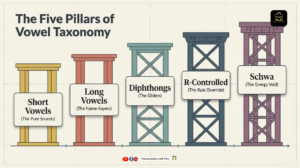
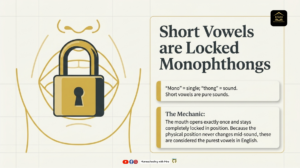
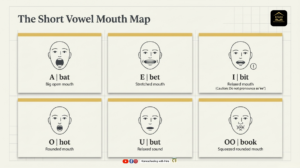
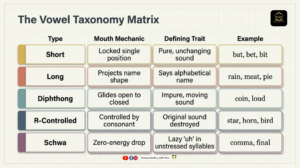
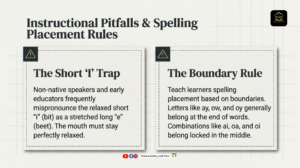
Short vowels are technically known as monophthongs. The etymology—”mono” (single) and “thong” (sound)—reveals their nature: the position of the mouth remains constant from the start of the sound to the end. These are considered “pure” because there is no movement of the articulators during production. To achieve precise articulation, learners should focus on specific mouth cues. The short ‘a’ requires a big open mouth, while the short ‘e’ uses a stretched mouth. A critical specialist tip for teachers: non-native speakers often confuse the short ‘i’ with the long ‘ee’ sound. The short ‘i’ is actually a relaxed sound, whereas ‘ee’ requires a much tighter, more stretched position. Observe how slight shifts in the vocal tract change the phoneme in these word sequences:
- Bat / Bet / Bit (Open mouth → Stretched mouth → Relaxed mouth)
- Bot / But / Book (Rounded mouth → Relaxed mouth → Squeezed rounded mouth).
4. The Long Vowel Secret: They Are Actually Gliders.
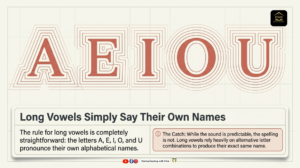
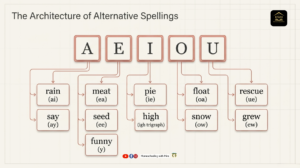
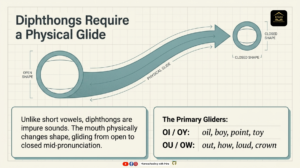
While we often categorise “Long Vowels” simply as the sounds that “say their name,” there is a deeper phonetic secret. Many long vowels and all diphthongs are “impure” or gliding sounds. Unlike the steady monophthong, the mouth must physically change shape and shift positions during the pronunciation of a single syllable. Identifying the “glide” is the missing link for students struggling with complex spellings. In diphthongs like “oi” (oil) or “ow” (shout), the mouth begins in an open position and closes slightly to finish the sound. Recognising that the long ‘a’, ‘i’, and ‘o’ involve this same articulatory movement helps learners transition from simple decoding to sophisticated speech and spelling.
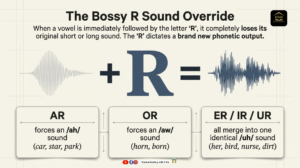
5. The “Bossy R” and the Transatlantic Divide:
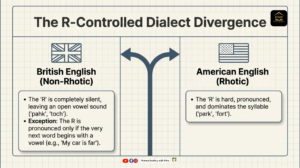
When a vowel is followed by the letter ‘R,’ it becomes an R-controlled vowel. In these cases, the ‘R’ acts as a “bossy” influence, forcing the vowel to abandon its original identity in favour of a new, blended sound. This phenomenon highlights a significant divide between rhotic (American) and non-rhotic (British) accents. The key rule for British pronunciation is that the ‘R’ is typically silent unless it is immediately followed by a vowel sound—a concept known as the “linking R.” For example, in the phrase “my car is far,” the ‘R’ in “car” is voiced because of the following ‘i’, but the ‘R’ in “far” remains silent.| Word | British Pronunciation | American Pronunciation || —— | —— | —— || Torch | “T-oh-ch” (Silent R) | “Torch” (Voiced R) || Her | “H-uh” (Silent R) | “Her” (Voiced R) || Park | “P-ah-k” (Silent R) | “Park” (Voiced R) |
6. The Schwa: The Lazy King of English.
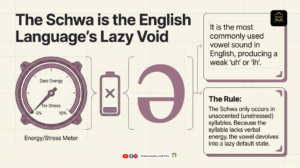
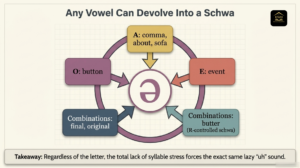
The Schwa (/ə/) is the most frequently used vowel sound in the English language and the ultimate “lazy” vowel. It is a short, neutral sound produced with a completely relaxed mouth. The Schwa is unique because it is not tied to a single grapheme; any vowel can transform into a Schwa when it falls in an unstressed or unaccented syllable. Understanding the Schwa is essential for achieving natural-sounding speech, as it appears in various positions across many word types:
- The letter a: comma, sofa, Pentagon, arrival
- The letter e: event
- The letter i: detail
- R-controlled/Suffixes: after, butter, social, original. Because any vowel can become “lazy” in unstressed syllables, identifying the Schwa is often the breakthrough moment for learners struggling with the rhythm and “music” of English.
- Conclusion: Listening Between the Letters. Mastering the English vowel system requires looking past the five letters we learned in kindergarten. Vowels are a physical symphony of breath, mouth shape, and muscular tension. From the pure stability of monophthongs to the lazy utility of the Schwa, these sounds define the character of our speech. The next time you speak, I challenge you to catch yourself in the act of articulation. Can you feel your mouth “gliding” through a diphthong, or can you spot a Schwa taking over a lazy syllable in a common word like “about”? Which of these five vowel types do you find most surprising in your own daily speech?
Watch the video lesson: https://youtu.be/BvPizlIG-8U?si=YJS8IQ-p1DvmS3Oj